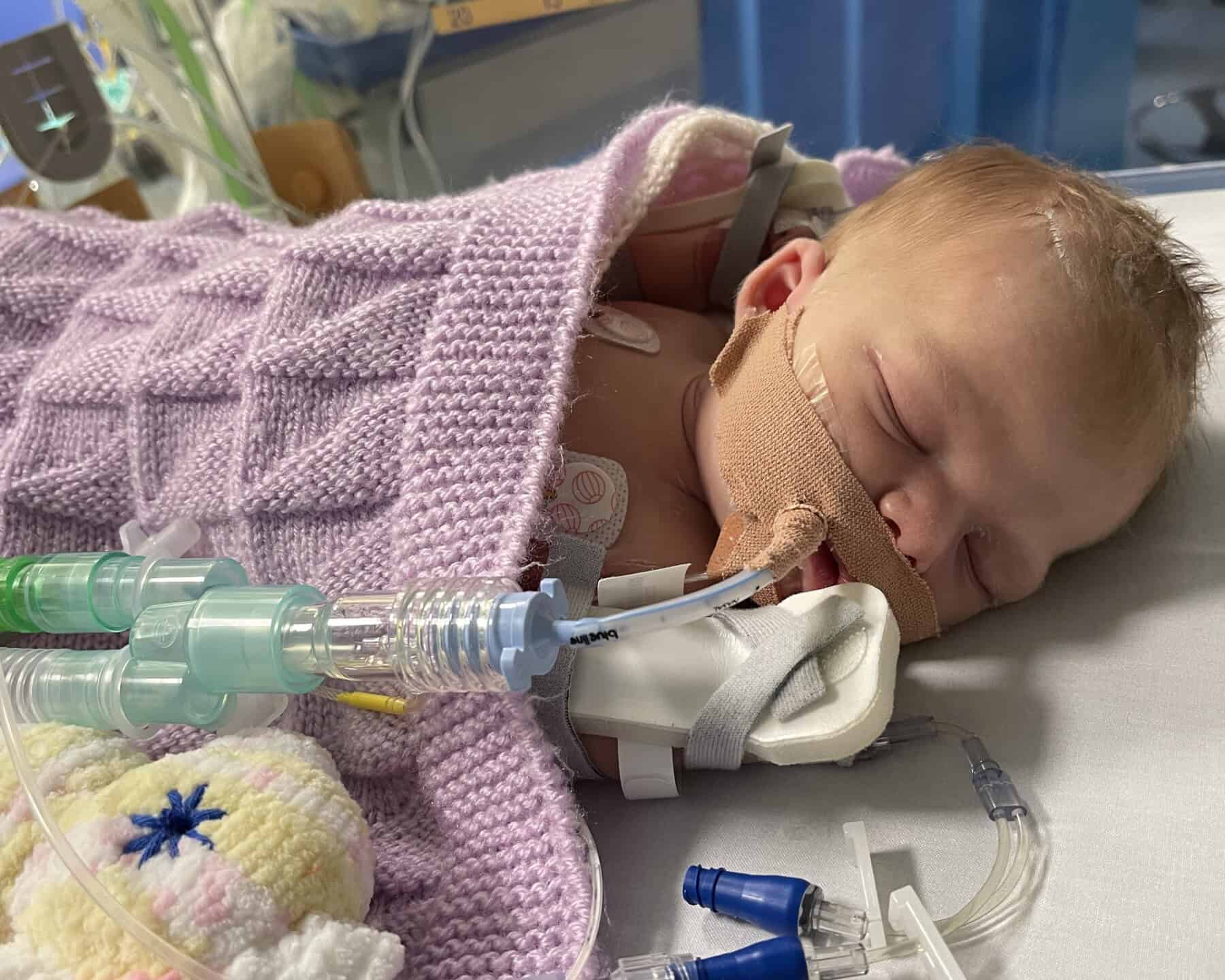
Aoife was just five days old when she started having uncontrollable seizures. The longer her seizures went on, the higher the risk of brain damage.
Aoife’s mum, Lotta, told us how terrified she was to learn that her critically ill baby needed to be moved from Bath to Bristol Children’s Hospital.
But as soon as The Wales and West Acute Transport for Children Service (WATCh) arrived to take Aoife to Bristol, Lotta felt reassured that her baby girl was in the safest possible hands.
“For the first few days of Aoife’s life, she was a happy, healthy baby. Even though she was born via emergency C-section, we were able to go home after only 24 hours in the hospital.
But when Aoife was just five days old, everything changed. A midwife visited us at home and noticed a few things about Aoife’s health which concerned her, so she sent us back to our local hospital in Bath. Once we were in hospital, Aoife became very unwell, very suddenly.
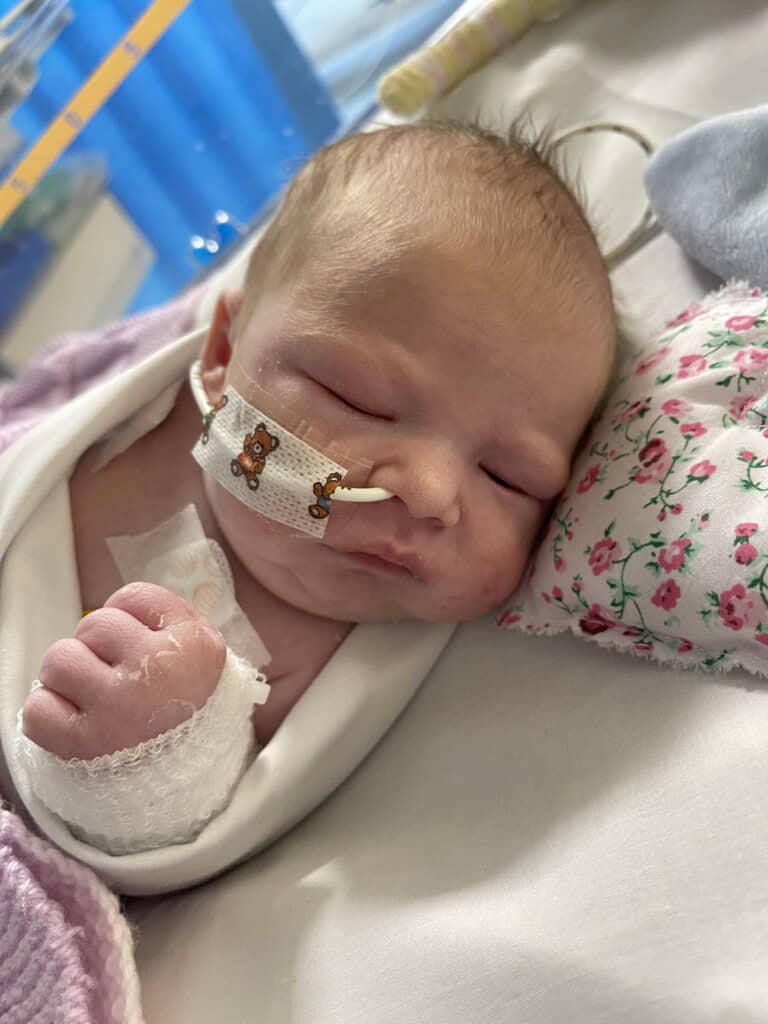
Aoife started having seizures. She was diagnosed with hypoglycaemia, meaning her blood sugar levels were falling far below normal, and she was immediately given multiple medications. But Aoife’s seizures wouldn’t stop.
Lotta, Aoife’s mum“We have never felt helplessness or numbness like we did that day. We stood there looking at our tiny baby in an incubator, surrounded by tubes. We felt like there was nothing we could do to help her; the situation was out of our hands.”
The doctors quickly decided to sedate and intubate Aoife. After she was stabilised, we were told she needed to be transferred to Bristol Children’s Hospital for specialist care.
Aoife was transported to Bristol via ambulance, and the care from WATCh was unlike anything we’ve ever experienced.
WATCh provides mobile intensive care for very sick babies and children, keeping them in a stable condition and transporting them safely to hospital.
Before Aoife was moved, WATCh took the time to speak to us. They explained everything to us so clearly and treated Aoife with such care and dignity. They talked us through each step, told us what would happen during the transfer, and truly understood how terrified we were as new parents. Their kindness and reassurance made an unbearable situation feel just a little less overwhelming.
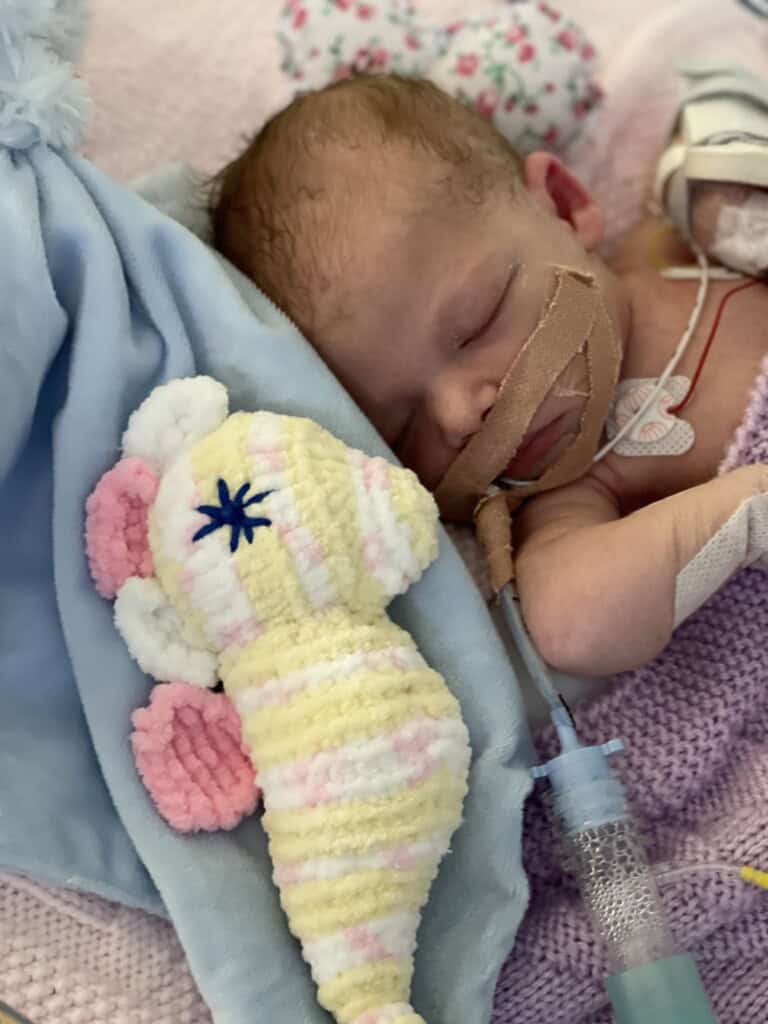
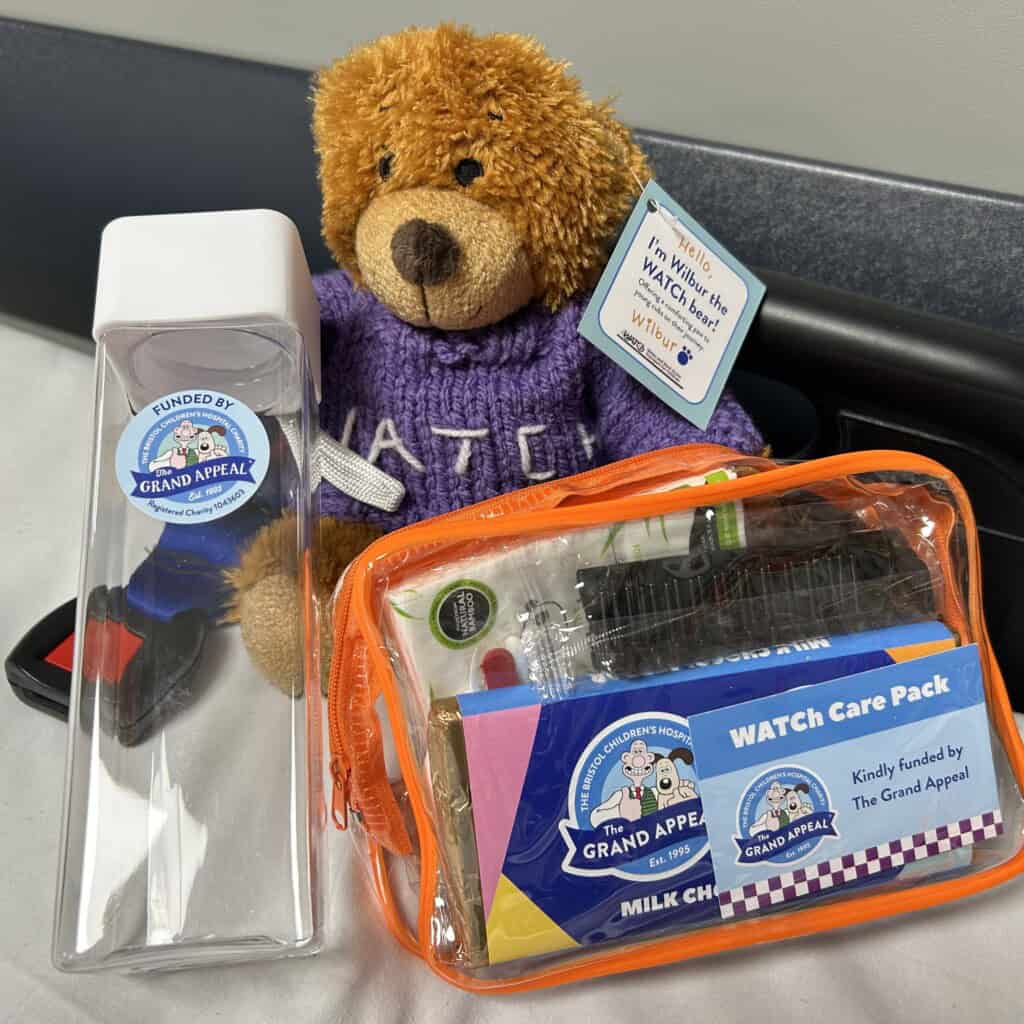
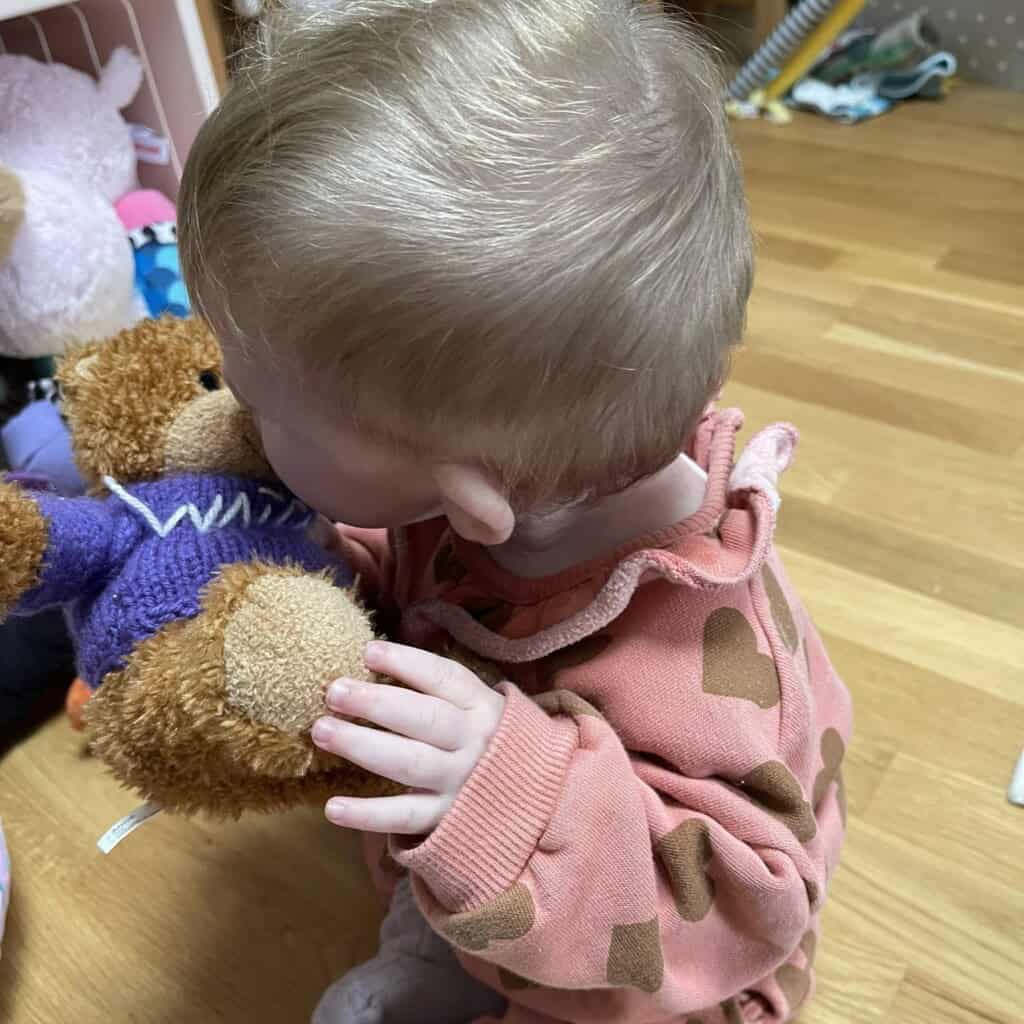
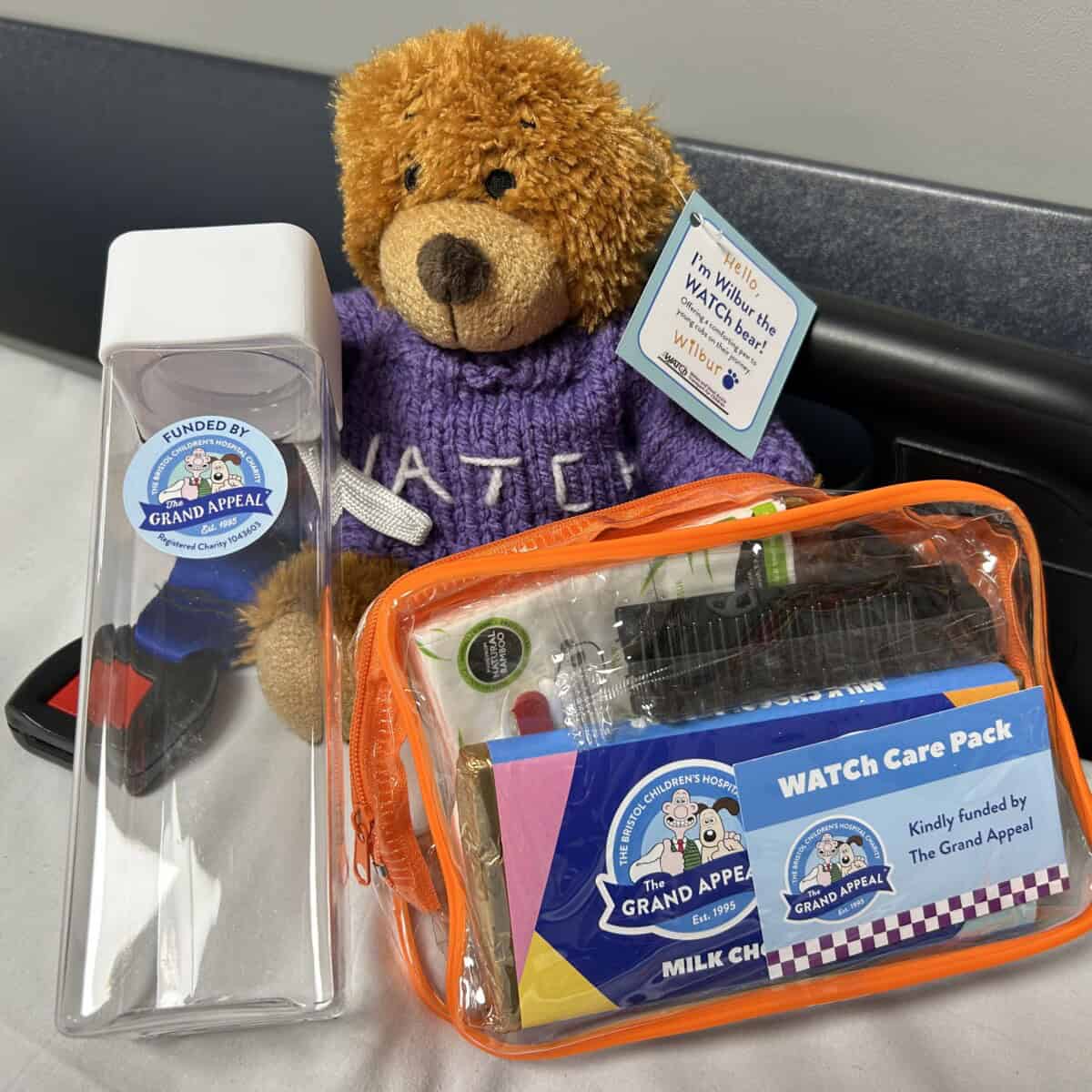
Aoife was given a Wilbur the WATCh teddy. These teddies are funded by The Grand Appeal to comfort poorly children during their journey to hospital, especially as their parents can’t always travel with them. We still hold onto Aoife’s teddy very tightly.
She was taken to the Paediatric Intensive Care Unit (PICU) at Bristol Children’s Hospital. Once Aoife arrived in Bristol, her seizures finally stopped. Then, we began the long, anxious wait for tests to show what damage, if any, the multiple full-body seizures might have caused.
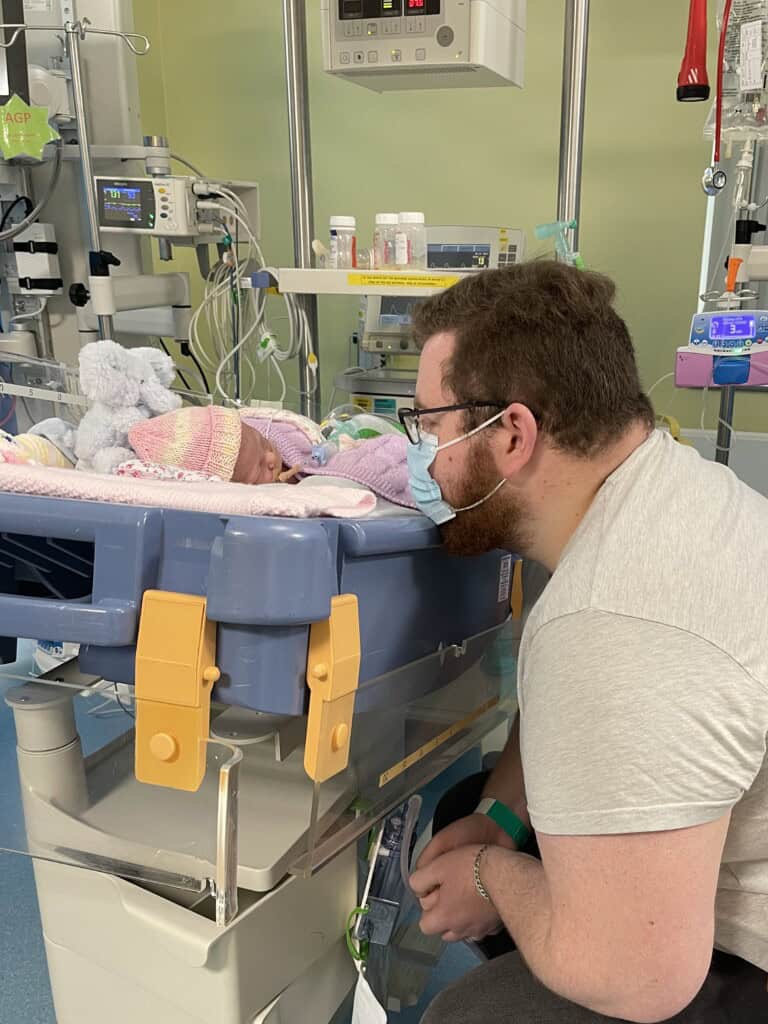
Lotta, Aoife’s mum“Aoife was so tiny – just 2.5kg – and I’ll never forget the sight of her surrounded by so much equipment. When she was wheeled away for an MRI test, the stack of wires and monitors seemed bigger than she was.”
We were relieved to hear that the seizures had caused only a minor brain injury, though the full impact wouldn’t be clear until she was older. Gradually, Aoife was weaned off most of her medicines, apart from her anti-seizure medication, and she no longer needed intensive care.
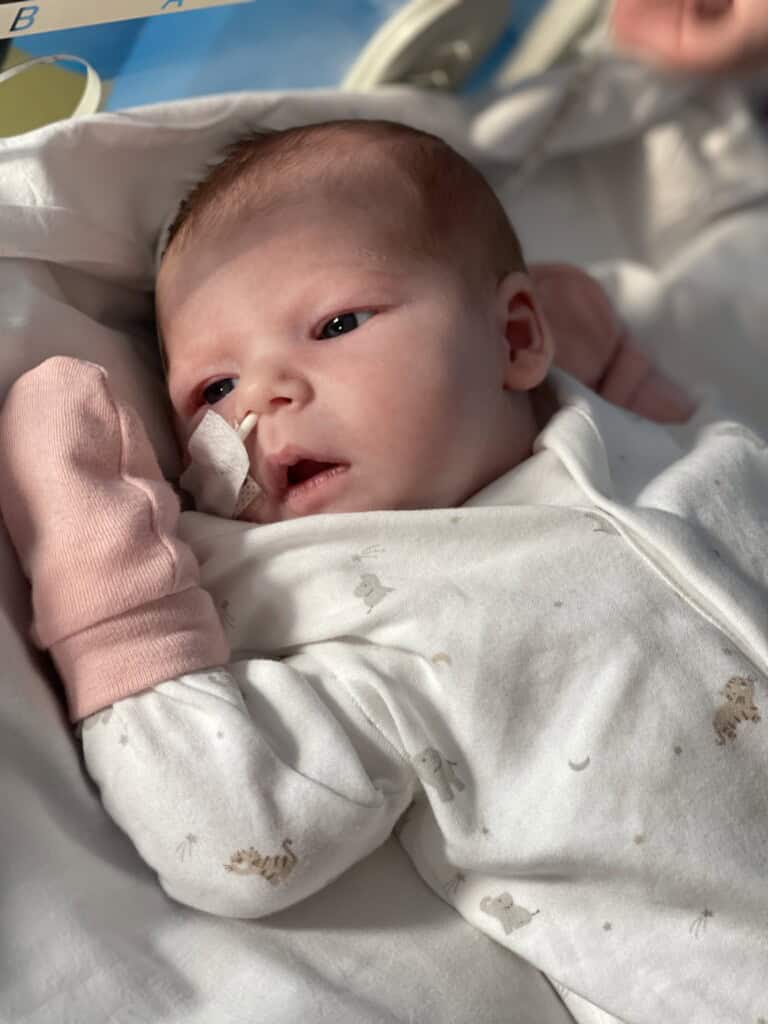
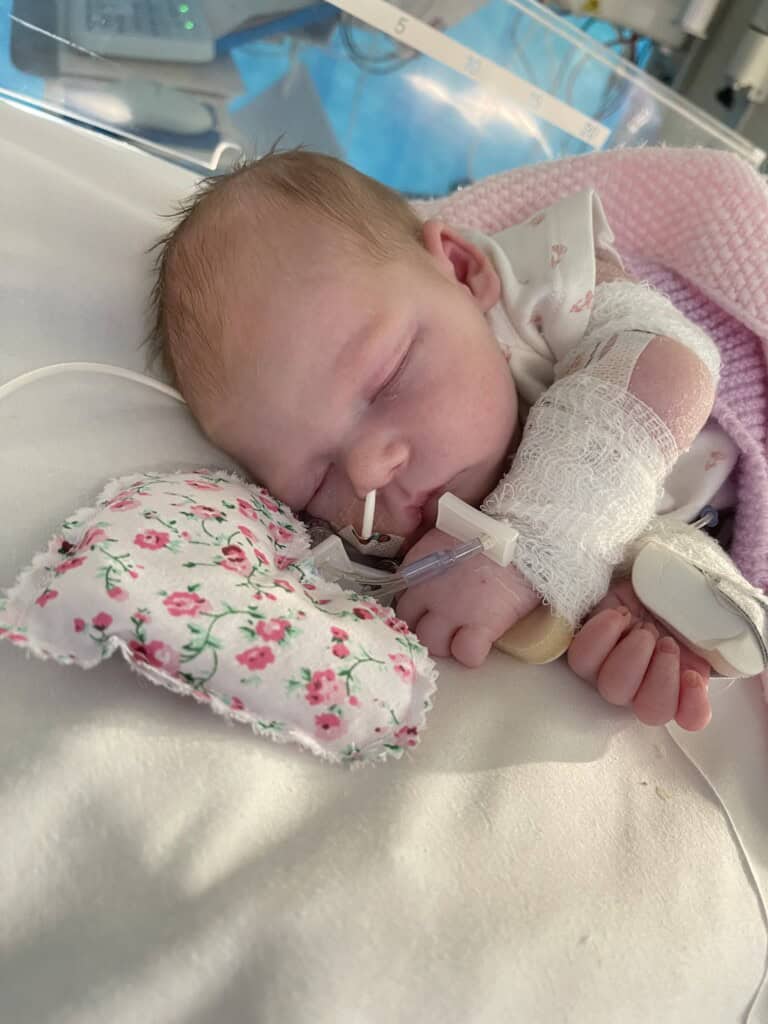
Aoife spent five days in PICU before being transferred to Bluebell Ward, which felt like a small but really important step forward. Through it all, the staff at Bristol Children’s Hospital and the WATCh team were extraordinary. They cared for Aoife with incredible skill and compassion, and they supported us at a time when we felt completely helpless.
Aoife’s total stay in hospital was two weeks, which in newborn terms felt like an eternity.
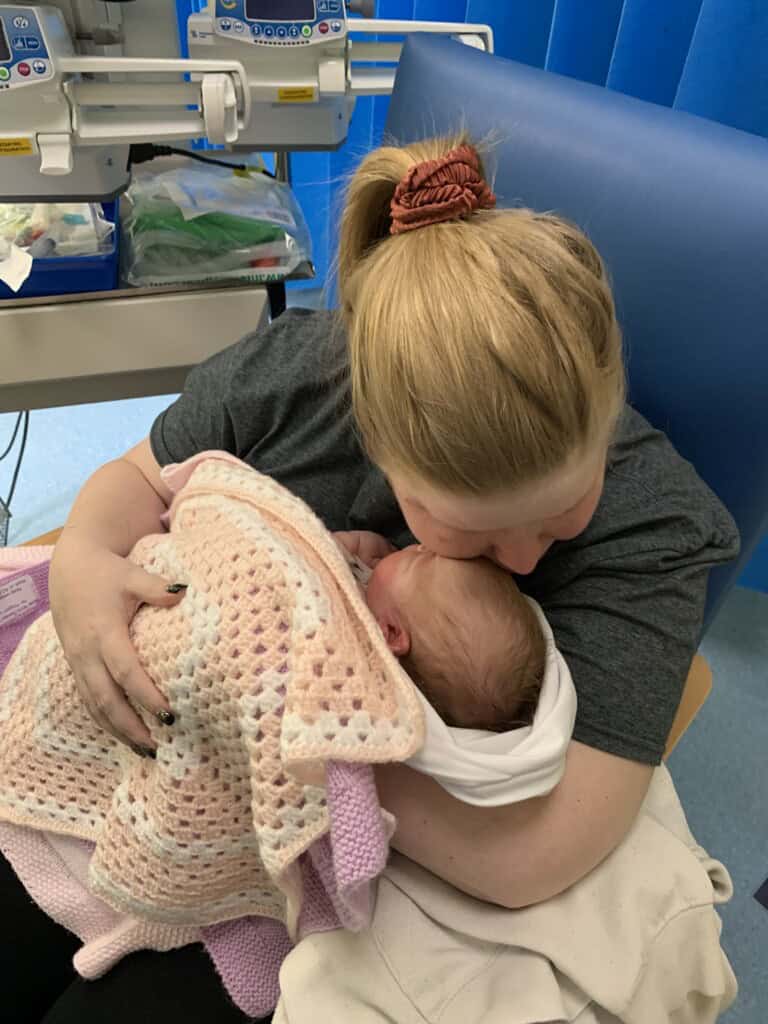
Lotta, Aoife’s mum“A friend of mine had a baby the same day as me, and I remember thinking how she was spending those early days cuddling her baby, while mine was in a heated cot. I hadn’t been able to hold her for five days.”
I have never felt relief like I did when we were finally told we could take Aoife home. When we were first discharged, Aoife still needed a nasogastric tube to feed her, and we had to learn how to manage that ourselves. After two weeks at home, our strong girl pulled her tube out. From that point on, she started feeding orally and did so brilliantly.
The start of Aoife’s life was rocky and terrifying, but every day we are thankful for the people who saved our baby girl and guided us through those fragile weeks. I wish I could thank every single person who was part of the first weeks of Aoife’s life and show them how well she is doing now. At nearly four years old, she’s thriving. She has been developing beautifully and hitting all her milestones.
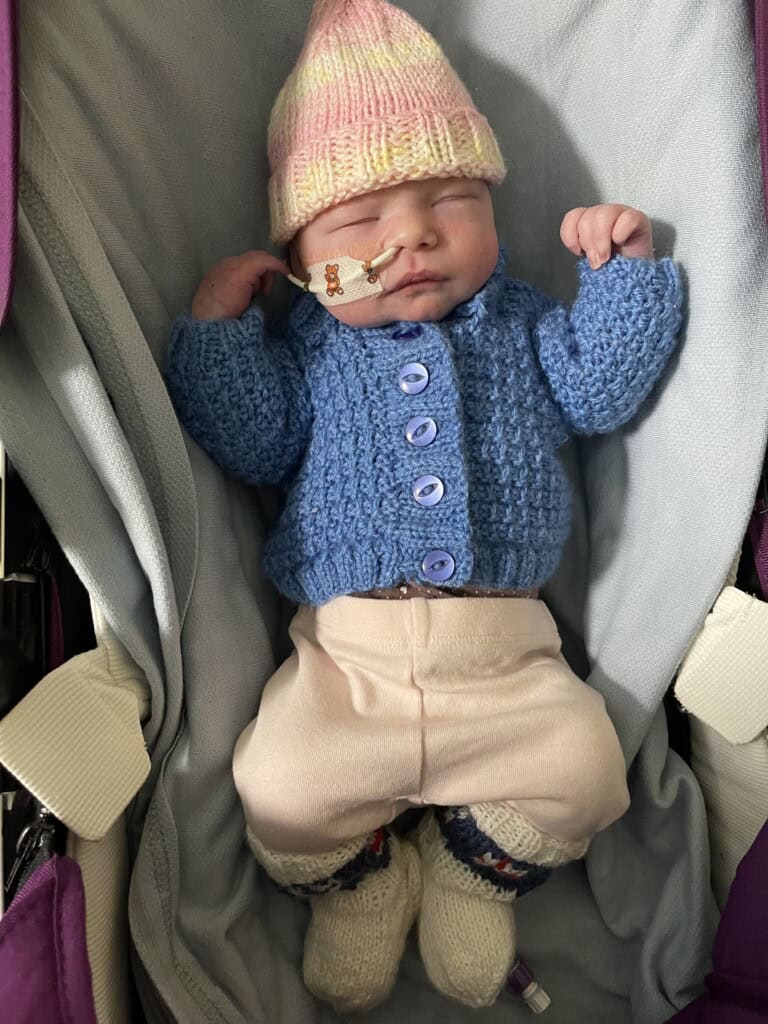
A few years after her neonatal seizures, she had her first febrile convulsion. These are seizures that happen when a child has a high fever, and Aoife’s convulsions are classified as complex, meaning they are more intense. This diagnosis has meant a few more overnight visits back to Bristol Children’s Hospital, where the care has always been incredible.
We will always be so grateful for the care Aoife received and continues to receive to this day. The staff at Bristol Children’s Hospital made the most frightening time in our lives feel just that little bit more manageable.”
Support the WATCh team
Help these heroes provide sick kids with the very best care.
Meet other young patients
-
Cots for Tots
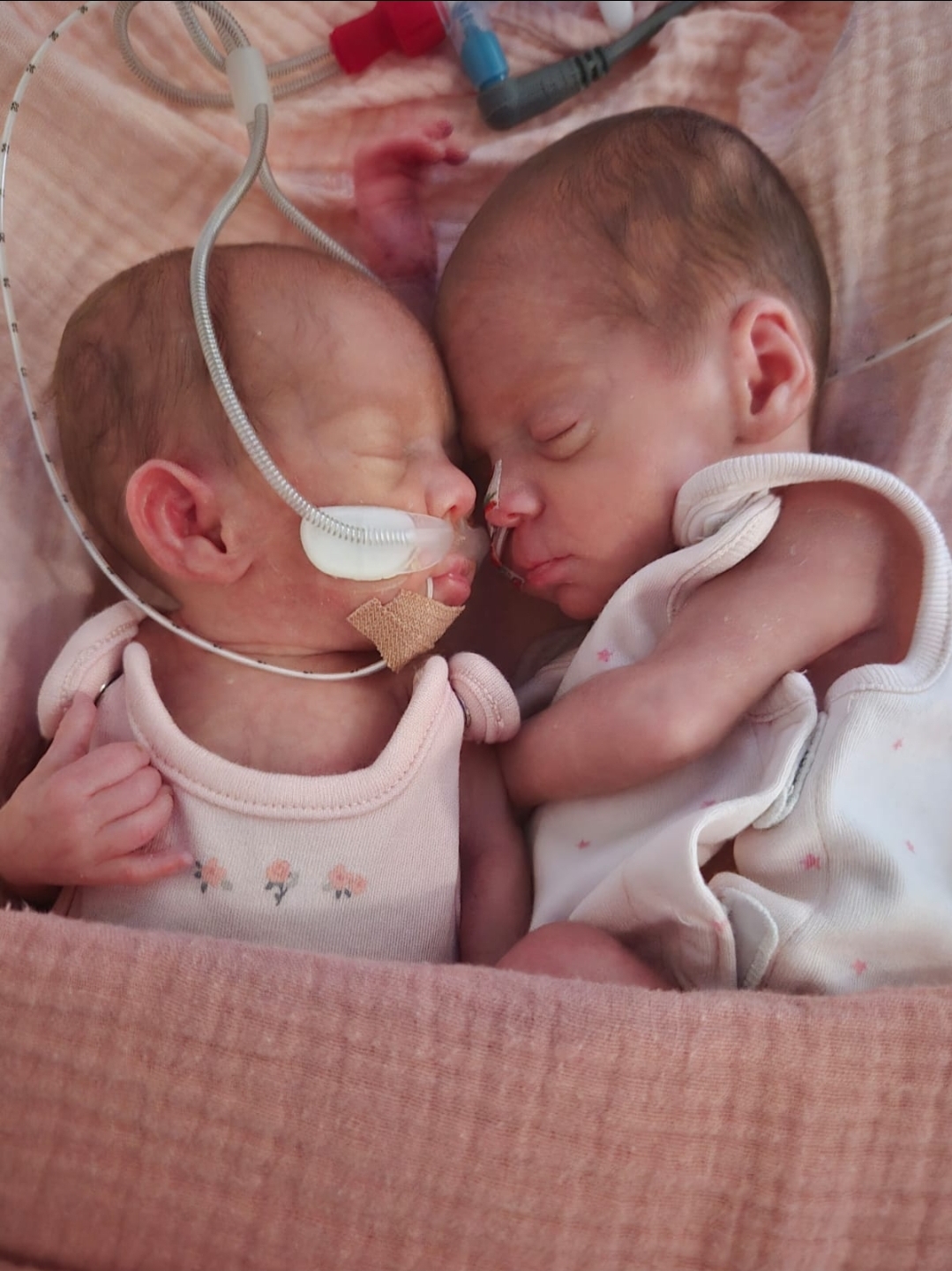
Bethany and Hazel
To mark Neonatal Intensive Care Unit (NICU) Awareness Day, we spoke to Kathryn, whose life changed forever in July, when her twins, Bethany and Hazel, were born just 28 weeks into her pregnancy. Kathryn, told us the story of her twin’s surprising arrival, and the comfort and support her family found amidst one of […]
-
The Grand Appeal
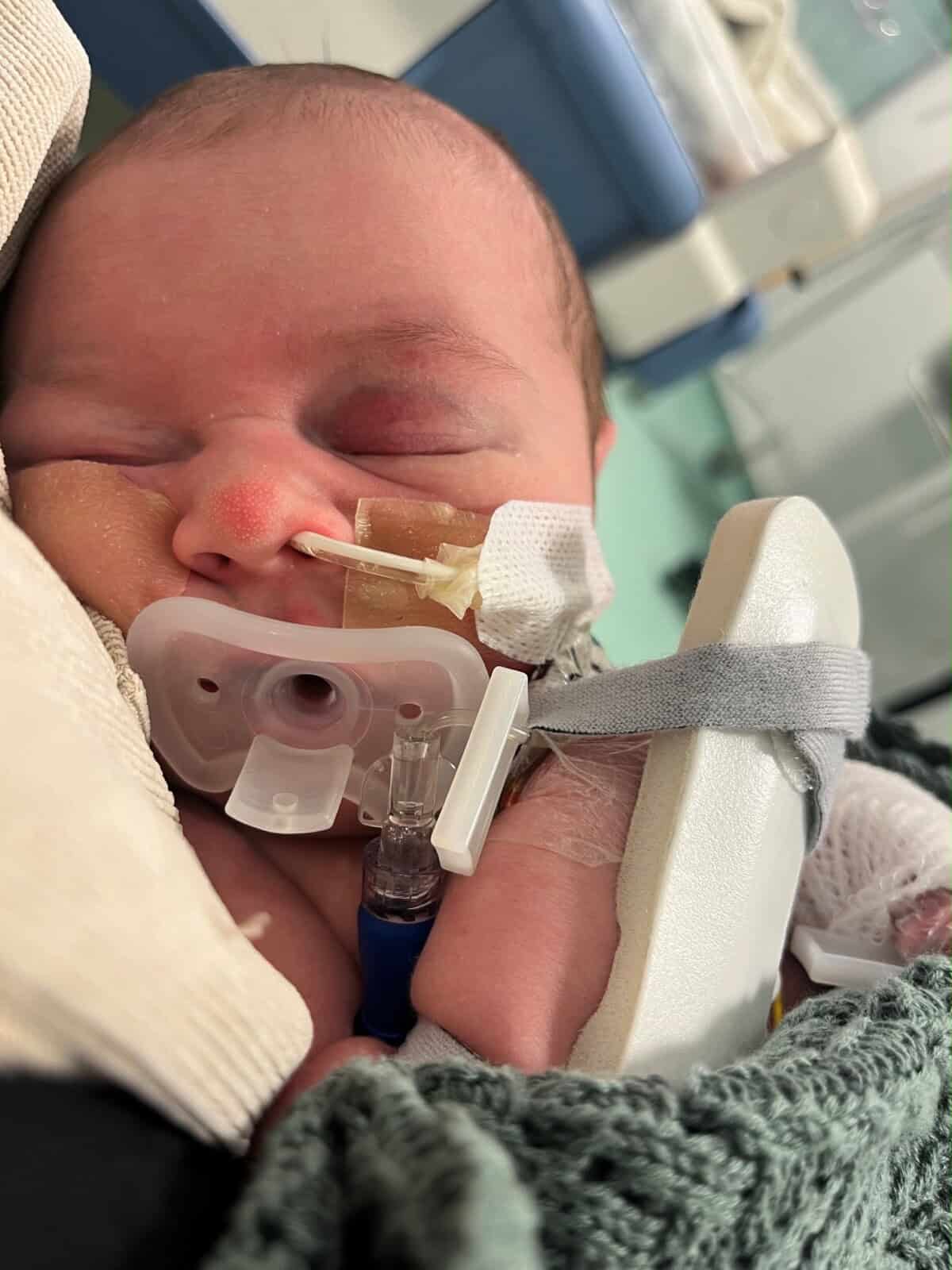
Rowan
As a new born baby, Rowan was diagnosed with Hirschsprung’s disease, a rare congenital bowel condition that affects around 1 in every 5,000 babies.
-
The Grand Appeal
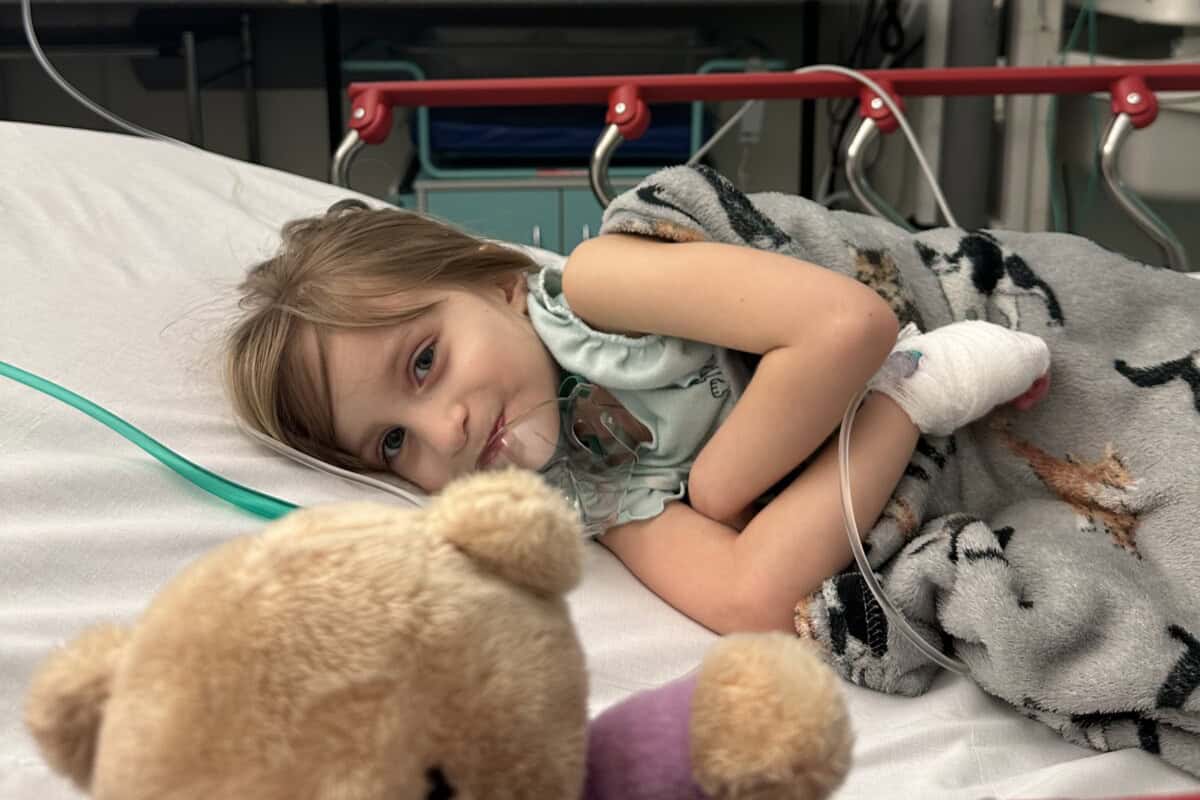
Blaise
Blaise was born with a condition so rare that it’s still under investigation.