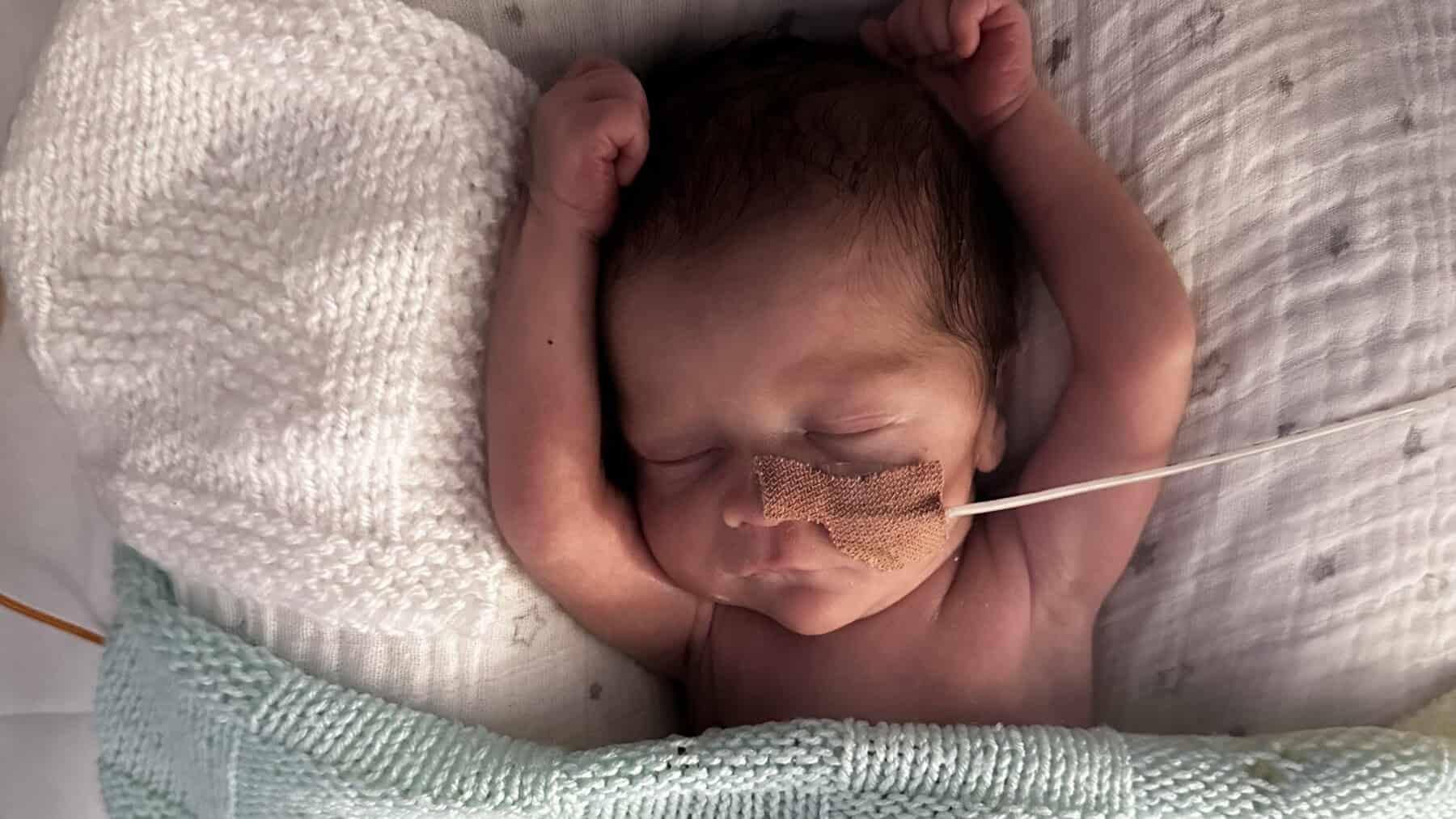
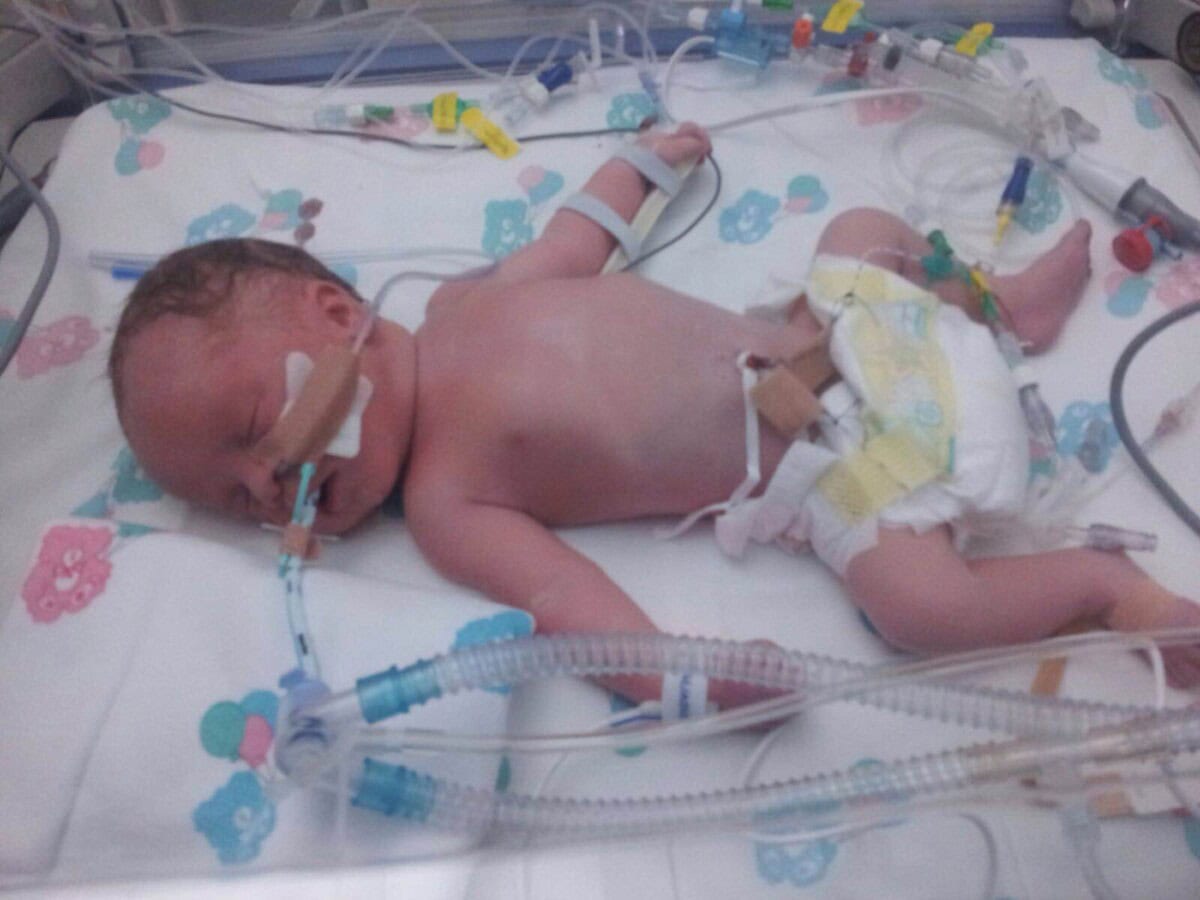
Rebecca and Ethan’s world collapsed when their baby, Reid, had a heart attack at 12 days old.
Reid went without oxygen for 40 minutes, which should have led to significant brain
damage.
But the outstanding care Reid received from his local hospital, his ambulatory team and St Michael’s Neonatal Intensive Care Unit (NICU) changed his future.
Rebecca told us the story of her baby’s remarkable recovery and incredible NICU staff who made it possible.
“At Reid’s 30-week scan, I was diagnosed with pre-eclampsia, a pregnancy-related condition
that causes high blood pressure. I was kept in my local hospital in Gloucester for monitoring,
but they couldn’t get my blood pressure to come down.
Two days later, in the early hours of the morning, things took a serious turn. I needed immediate intervention to save both mine and the baby’s life. It was decided that I would need to deliver early.
Rebecca, Reid’s mumIt’s not the birth we ever imagined. I was only 30 weeks pregnant, so we felt very unprepared; I hadn’t even got a hospital bag ready. It was overwhelming and scary to think that Reid’s prematurity meant he would be born unwell.
Reid did quite well with his first few days of life, but at seven days old, he developed sepsis from his umbilical line.
With the help of antibiotics, Reid started to get better throughout the week. When he was 11
days old, he was strong enough to be taken off the CPAP (Continuous Positive Airway Pressure) machine that was supporting his breathing. The umbilical line that had made him ill was replaced with a long line. This is a line that goes through a vein to the baby’s heart so the nutrients can pump around the body. We were so happy because we felt like things were moving in the right direction.
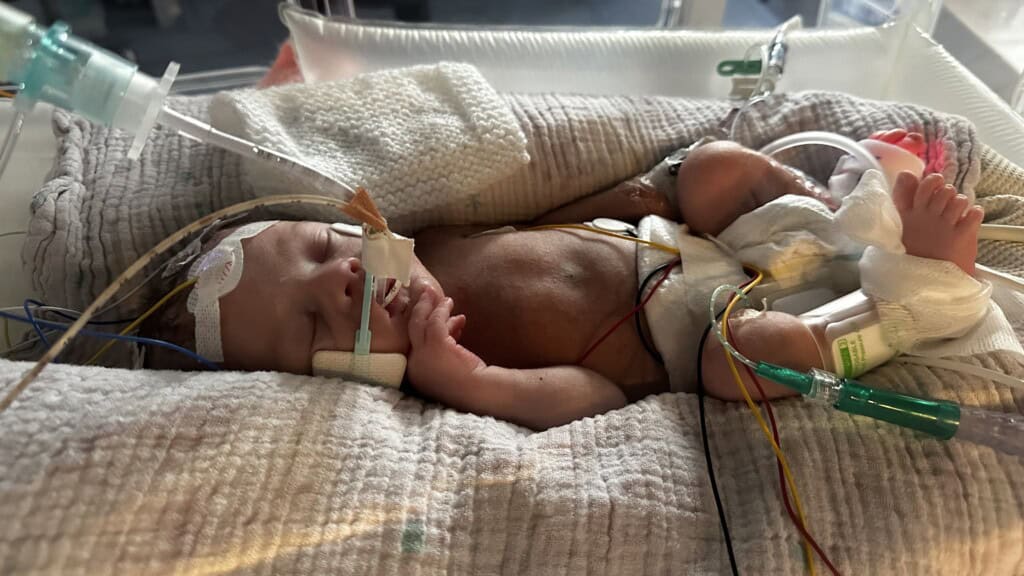
Then, the next day, we got the call. It was about 6:30 in the morning. The NICU rang to say that Reid had collapsed, and we needed to come in immediately. It was the call no parent ever wants to receive. We didn’t know what was waiting for us at the hospital. We didn’t know if our little boy was alive.
Reid suffered from something called a cardiac tamponade. This meant that his long line had
found its way into his heart sac, and instead of the fluid pumping around the body, the fluid had built up inside the sac. Over 24 hours, enough fluid built up that Reid’s heart had no space to contract, so he had a heart attack. The paediatrician on shift that morning said that he had only ever seen this happen once in his entire career, 22 years earlier.
Reid’s heart attack meant that he went around 40 minutes without oxygen. We knew it was
serious because when we arrived at the hospital, the paediatrician came running into the
parents’ lounge and said, ‘Reid’s collapsed, and I’m not sure if we can get him back. We’re
doing everything we can. Would you like to come in and say goodbye?’ Those words will haunt me for the rest of my life.
After a few minutes, they managed to get his heart started again. It was then that we were told St Michael’s NICU had already been contacted and the Southwest Neonatal Advice and
Retrieval Service (SoNAR) were on the way to take him to Bristol.
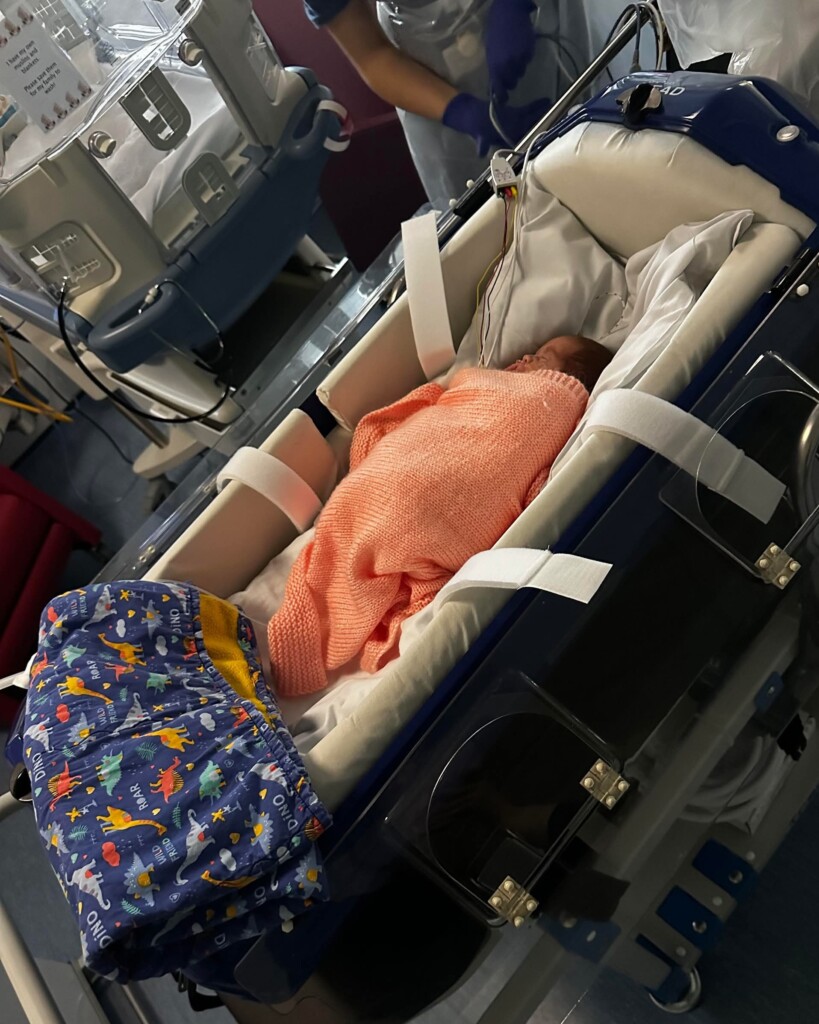
Moments before SoNAR arrived, there was a great deal of activity and urgency around us. No one was to blame for this atmosphere, as that morning was horrendous for everybody.
The SoNAR team immediately took charge of the situation. We’ll never forget the lead
consultant, Aless. She was professional and calm, explaining exactly what had happened to
Reid and what his possible outcomes were. It was a very scary conversation to have, but her
honesty and patience were what we needed in that moment.
We were anxious about Reid being blue-lighted to Bristol, given his poor condition, but they
were great at explaining how the transport incubator would keep Reid stable. They reassured us that they would be constantly watching Reid. If there was any sign of a problem, they would be able to deal with it. We felt like we were in the safest hands.
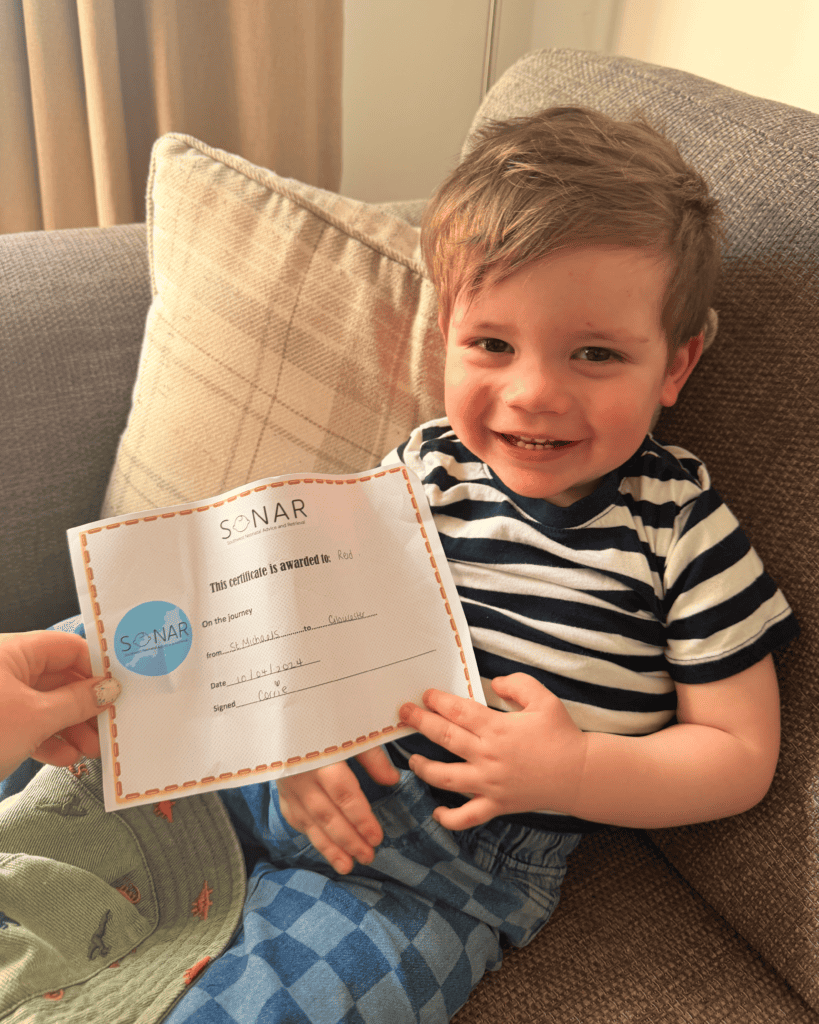
The SoNAR team told us that Reid had suffered a HIE (hypoxic-ischaemic encephalopathy),
which is where a baby’s brain hasn’t received oxygen for some time. We were told that his
outcomes could range from losing a couple of IQ points (which we would never notice) to life-changing disabilities.
As soon as we arrived at St Michael’s NICU, every staff member greeted us with pure loveliness.
I imagine they’d been told why we were there because everyone knew to be delicate with us.
Our doctor took us aside and explained that Reid had a zero to slim chance of a full recovery
based on the extent of his brain injury and the impact that being without oxygen had on his
major organs. We were presented with the choice to start end-of-life care or to keep him
comfortable for 24 hours and see what happened. I am forever grateful that we went with the latter option, as we weren’t ready to say goodbye to our little boy.
Reid’s first nurses, Sophie and Jess, felt like angels watching over him. They were so careful with him, chatted to him like any other baby and made me and my husband feel so welcomed. They kept us informed of Reid’s status throughout the night and made it clear that we were welcome to sit with him for as long as we needed.
Nurses would come and sit with us whilst we cried and talked about our little boy. None of them ever made us feel like we were wasting their time or like our son didn’t matter.
Rebecca, Reid’s mumThe entire team at St Michael’s will always have a special place in our hearts because of the kindness they showed us and the level of care they gave to our son in his time of need.
The day after arriving at St Michael’s, we spoke to the family support worker at NICU, who told us that we could stay in Cots for Tots House just across the road. A huge sigh of relief washed over us as the thought of being at home, an hour away from our boy, just wasn’t imaginable.
The kitchen and living area of Cots for Tots House felt so homely that it was easy to forget at
times that you were away from home. It was such a privilege to have our own space, close to
our son but away from the noise of NICU. I could see Reid’s hospital room from our bedroom window, which eased my mind and helped me to rest.
After a very scary 24 hours, Reid started to make a remarkable recovery. Because of the 40
minutes without oxygen, everyone was expecting to see significant brain damage on his scans, but nothing showed up. No one could explain this. Reid continued to have weekly brain scans, but no sign of brain damage appeared. The only thing the team could attribute to this was the immediate and incredible CPR that the NICU team at Gloucester Royal Hospital gave to him.
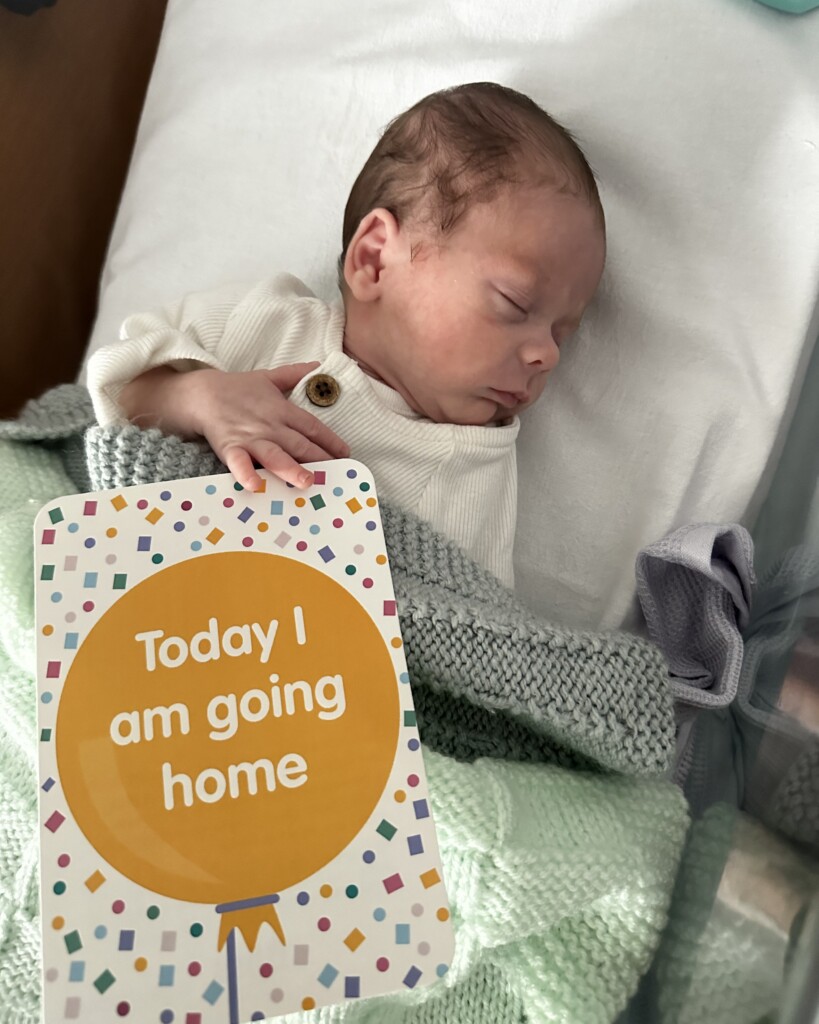
Reid stayed in St Michael’s for a week, and then he was discharged back to Gloucester. In total, he spent seven weeks in intensive care. It felt amazing finally being able to bring our little one home after seven long and scary weeks. It was strange at first, not hearing the beeps from NICU or having a nurse on stand-by, but we got the hang of it.
Reid has made an incredible recovery and is continuously going from strength to strength. The scary conversations we had to have when he was admitted to St Michael’s feel like they were about a completely different little boy. He is such a curious and funny little character who brings us so much happiness. I wish we could go back in time to that terrified couple at St Michael’s and tell them that everything will be okay.
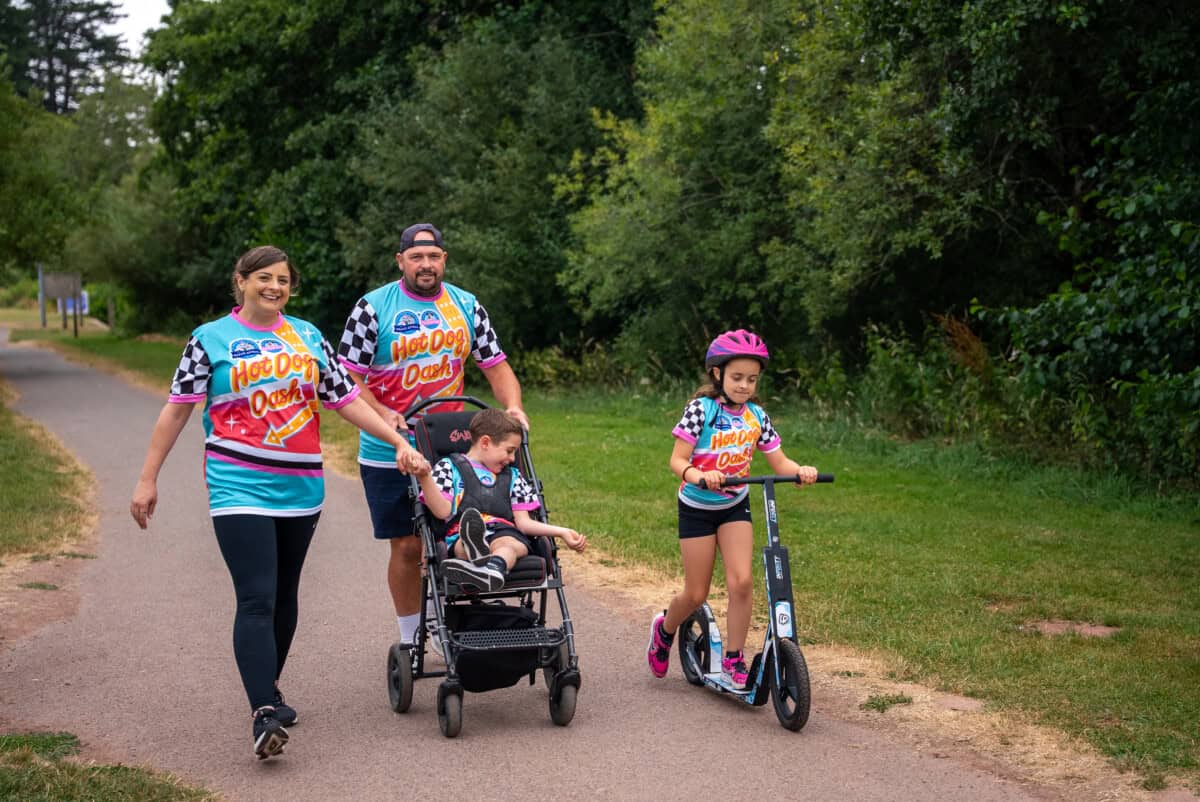
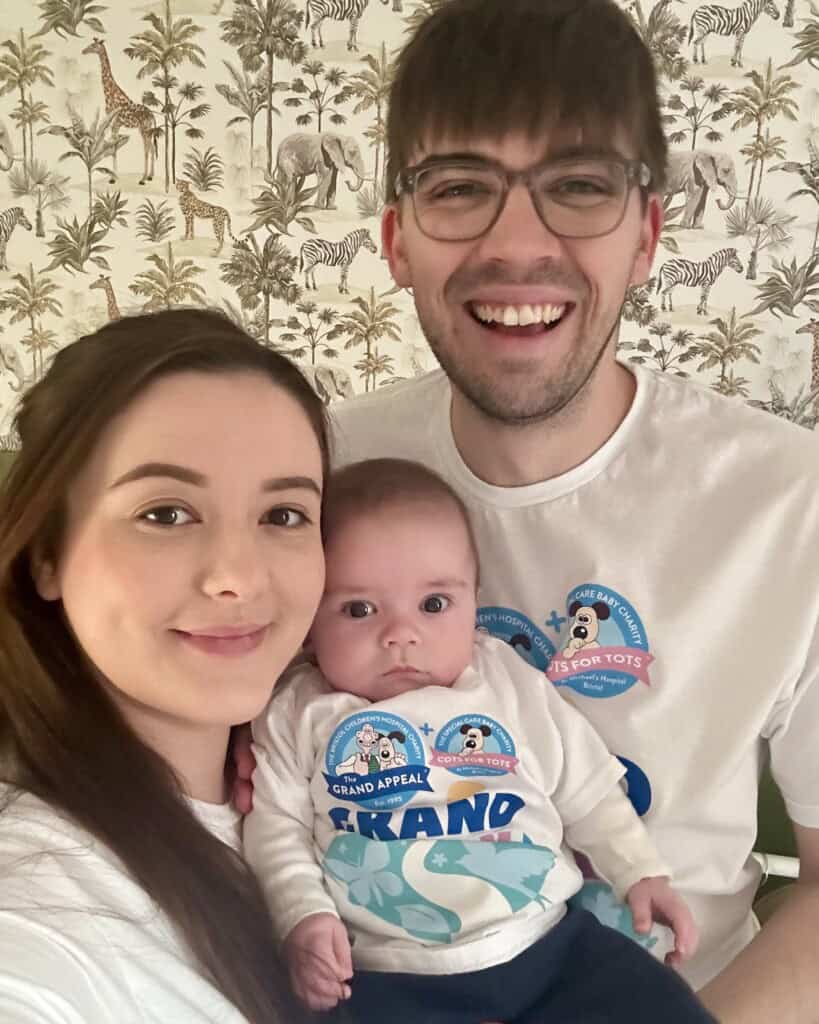
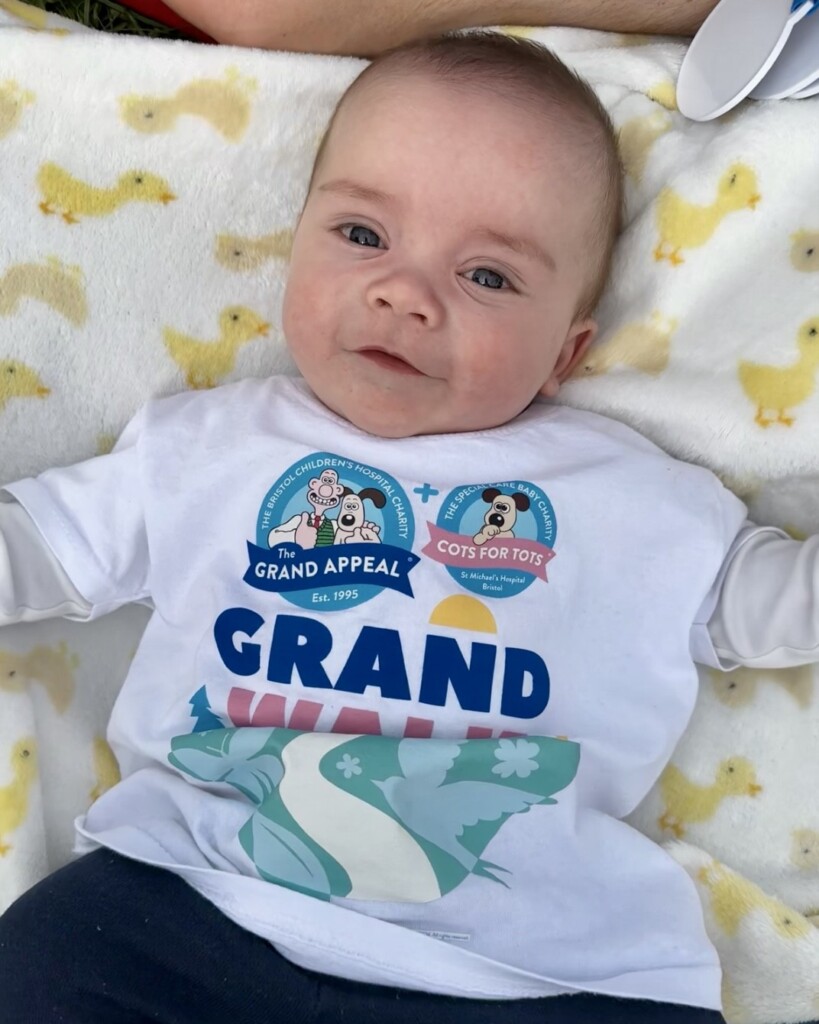
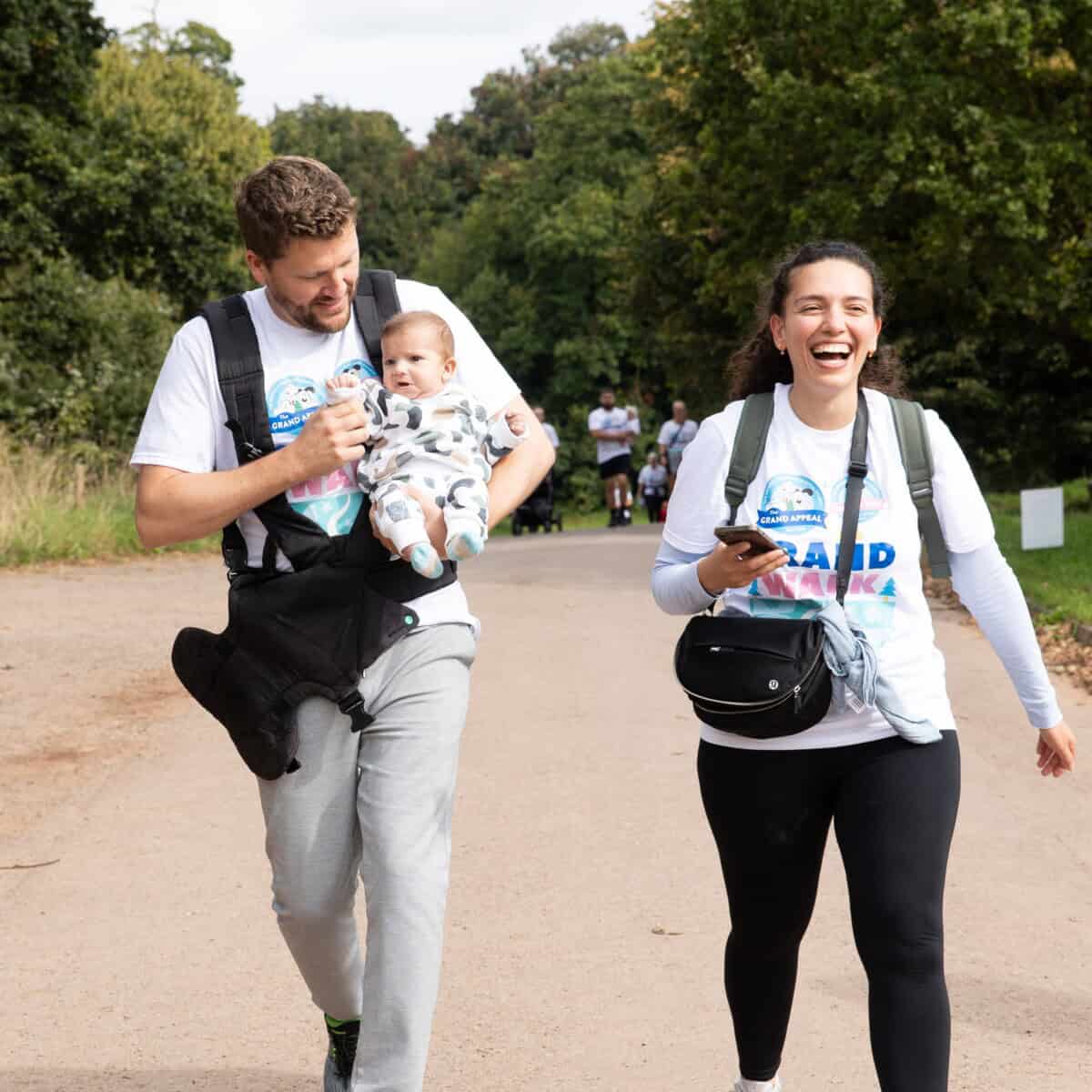
We feel so indebted to the NICU team and Cots for Tots because every single person who met us that weekend went above and beyond for our son in his time of need. When we saw that The Grand Appeal was launching a new family-friendly event, Grand Walk, we knew that we had to take part. We wanted to do whatever possible to raise money for parents who may find themselves in our position in the future.
We managed to raise over £800 for Cots for Tots through our sponsored walk, and we plan on doing more fundraising for Cots for Tots in the future because it is such an important charity to us.
Follow in Reid’s footsteps
Bring your little one along to Grand Walk 2026 on Sunday 13 September.
Meet other NICU babies
-
Cots for Tots
Sebastian
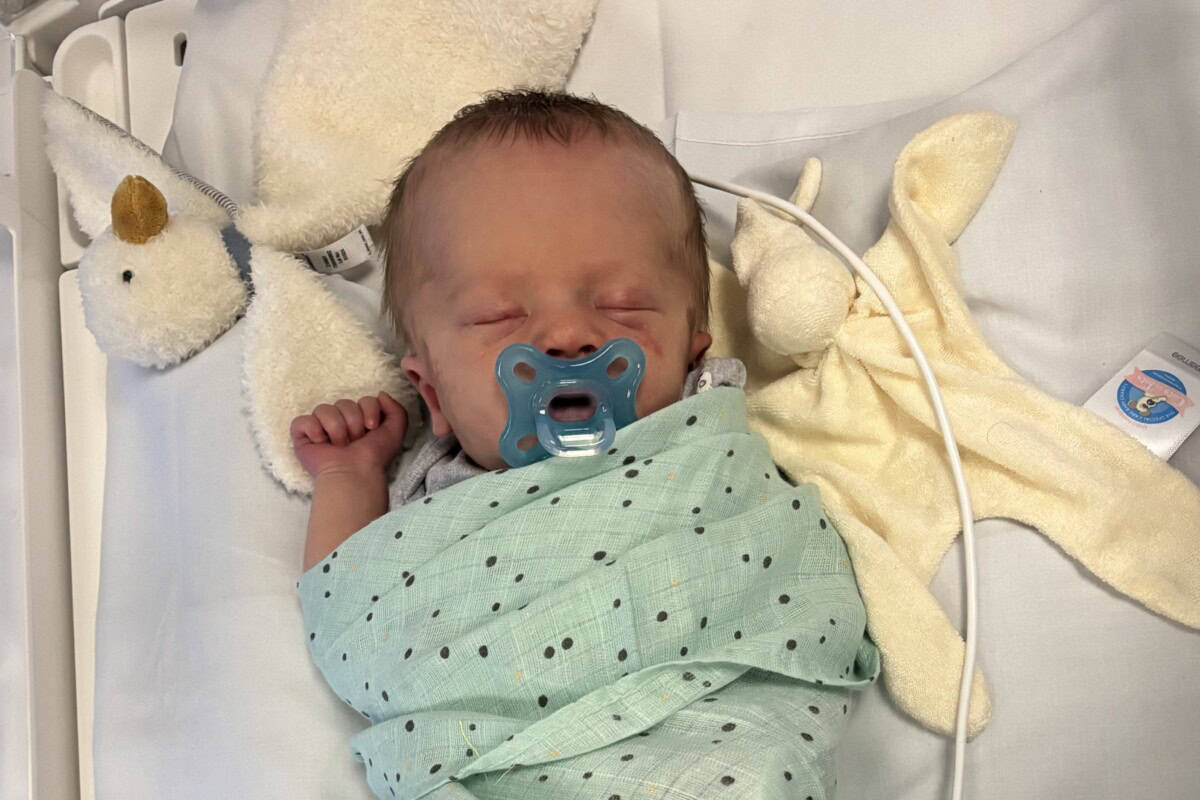
Baby Sebastian was born with a brain condition so severe that he needed surgery at five days old.
-
Cots for Tots
Leon
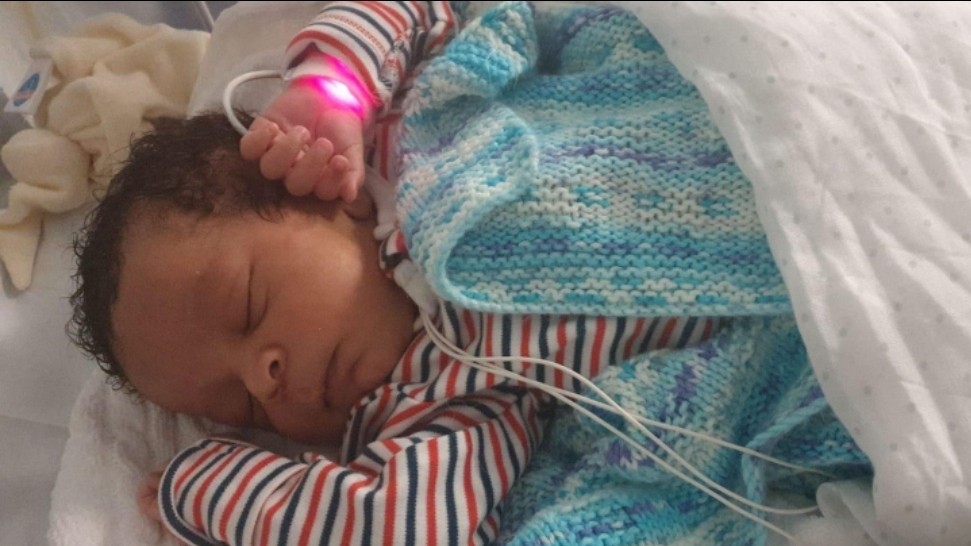
Leon developed a rare condition called CPAM in the womb. His prognosis was bleak, but Leon defied the odds.
-
Cots for Tots
Alfie
Alfie was only a few minutes old when he was put on life support.